Sarah M.Accessible place· 2h
Found this café today — wheelchair accessible entrance, plenty of space between tables and accessible bathroom.
Wellington
24 8
Aiga Enable is building technology that helps people communicate, manage and share their accessibility needs with greater confidence, choice and control.
Your accessibility identity

Jordan Williams
A-ID: AID-7X94-M2Q6
ISSUED: MAY 2025
EXPIRES: MAY 2027
Scan to see an
example A-ID
See how accessibility information can be securely shared.
Currently being developed and prepared for early testing.
Aiga Enable is an accessibility technology company helping people with disabilities communicate their accessibility needs, while giving organisations and services the information they need to better understand and support them — in advance.
We are building the digital infrastructure for a more connected accessibility ecosystem, making accessibility information easier to manage, communicate and share across different services, organisations and everyday experiences.
Our goal is to help create a world where accessibility needs can be understood, giving people with disabilities greater confidence to access the world, while giving organisations and services the opportunity to be prepared rather than reactive.
Accessibility information is often spread across different organisations, services and systems that don’t communicate with each other. A person with a disability may provide important information to healthcare, transport, accommodation, employment, education, events and other services, yet that information doesn’t necessarily move with them.
One identity. Many journeys. Your control.
A-ID brings your accessibility information together in one place, so you can choose what information is relevant to each journey and control how it is shared.
A-ID is being developed to help reduce the need for people to repeatedly explain their accessibility needs across different situations.
One person. One accessibility identity. Many journeys.
Your accessibility needs don’t stay in one place — they move with you. A-ID brings the right information into context for each journey, helping you communicate what you need with greater confidence, choice and control.
01 / 09 · One identity · Many journeys · Your control
Set up your accessibility identity once — your information, ready whenever you need it.
Select the journey relevant to your current situation.
Choose the information that's relevant and helpful to share.
Choose who you want to share this information with.
Set how long they can access the information you've shared.
Review and share only what you've chosen.
Select the journey relevant to your current situation.
Choose the information that's relevant and helpful to share.
Choose who you want to share this information with.
Set how long they can access the information you've shared.
Review and share only what you've chosen.
You can update, pause or remove access at any time.
You're always in control.
AIGA Community is being developed as a space where people can discover accessibility places, share experiences and recommendations, ask questions and help others navigate the world.
AIGA COMMUNITY
What's happening in the community
Found this café today — wheelchair accessible entrance, plenty of space between tables and accessible bathroom.
Wellington
Travelling on the bus today was much easier because the driver understood my accessibility needs.
Has anyone had a good accessibility experience at Auckland Airport?
Aiga Community
What would you like to share?
Share an experience, recommendation, place or ask the community.
A-ID connects your accessibility information with the shared knowledge of AIGA Community.
A name grounded in connection. A technology built for independence.
Aiga means family — however it extends beyond immediate family to include the people who support you, stand alongside you, and form part of your wider community. It represents connection, belonging and collective support, recognising that accessibility is not experienced in isolation.
Enable means creating the conditions for people to participate, contribute and live with greater choice, confidence and independence. It is about removing barriers, providing the right tools and information, and supporting people to do things in ways that work for them.
Together, Aiga Enable represents our belief that people, families, communities and organisations can work together to make accessibility easier, more connected and more inclusive.
A-ID puts that belief into practice — giving people greater control over their accessibility information and how it is shared.
Empower Accessibility. Enable Independence. Reduce Risk.
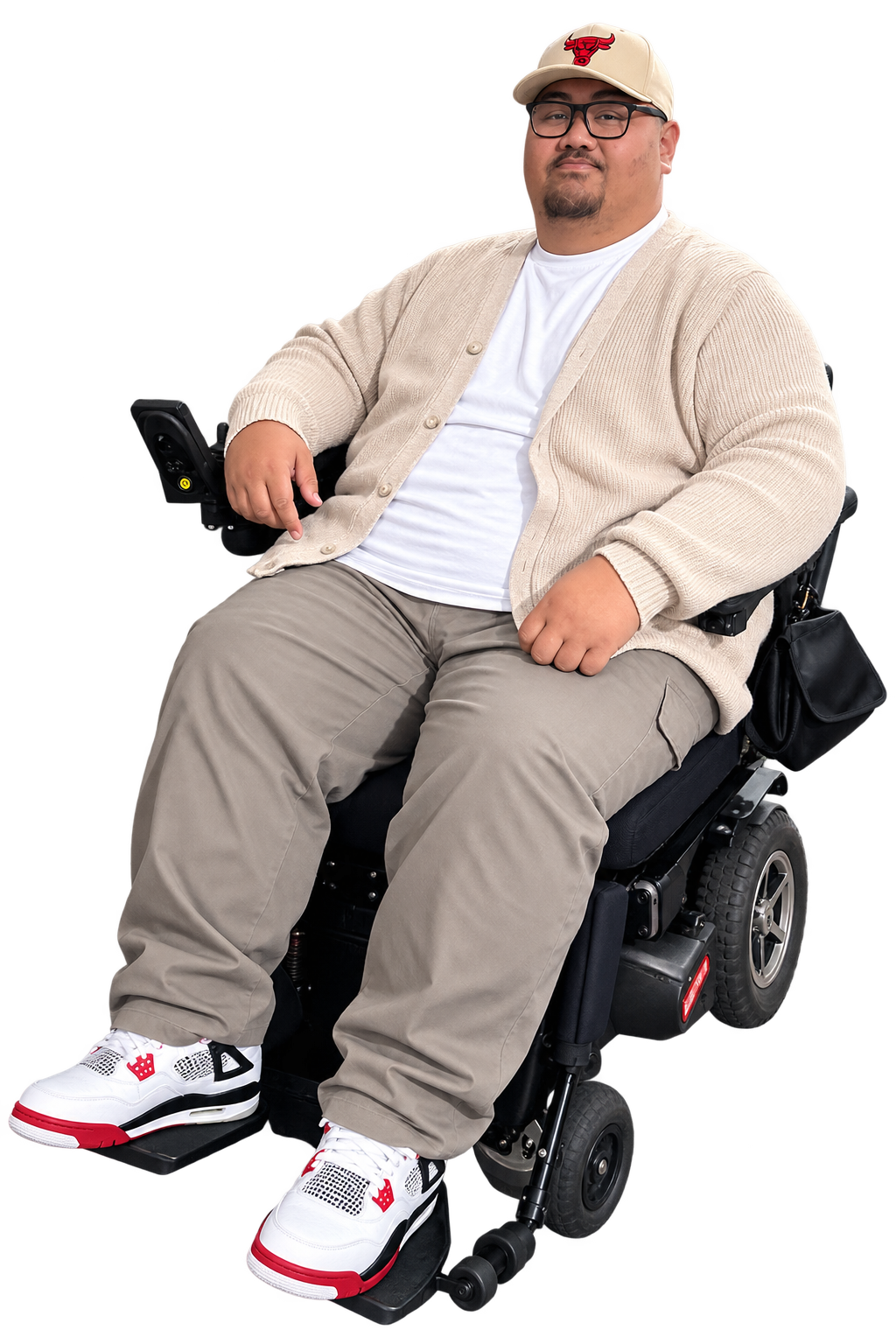
Kiki Savili
Founder & Director, Aiga Enable
A new reality changed the way I saw accessibility.
After a spinal cord injury, I had to adapt to a new reality and navigate everyday life in ways I had never experienced before. Accessibility looks different for everyone, and constantly having to explain my access needs made it feel, at times, easier to withdraw from the world and create a more manageable environment around me.
That experience deepened my understanding of how important it is for places and services to recognise people as individuals. It showed me the value of accessibility support that feels more connected, personal and responsive — support that helps people feel understood without having to explain everything from the beginning each time.
It made me ask:
What if organisations and services were better equipped to understand and support people with disabilities?
That question became the foundation for A-ID.
As Founder and Director of Aiga Enable, I am developing technology to make accessibility more personal, connected and controlled.
Interested in Aiga Enable or A-ID? Stay connected as we continue developing the platform.
Prefer email? support@aigaenable.co.nz